The electricity behind every AI answer
An AI reply feels weightless. It is not. What the 2026 AI Index says about energy and water, and what a sensible user can do about it.
By Howell Asava, Developer, Vukalink ·
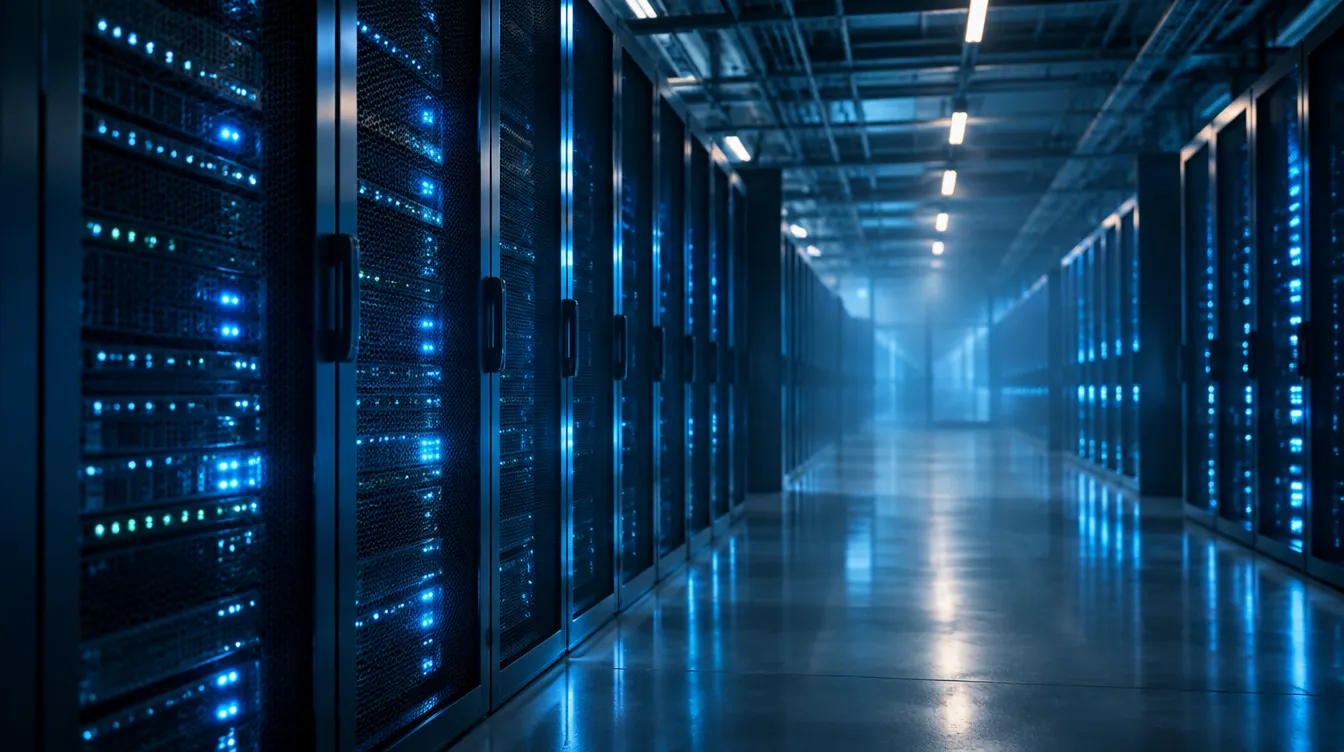
When you type a question and an answer appears two seconds later, nothing about the experience suggests a power station. But somewhere a building full of specialised chips has just done a great deal of arithmetic, and those chips need electricity to run and water or air to cool.
The scale, according to Stanford
The 2026 AI Index gathers the best available estimates. A few that stood out to me:
- The power capacity of AI data centres reached about 29.6 gigawatts, which the report compares to the entire state of New York at peak demand.
- Training a single recent large model, Grok 4, was estimated to produce about 72,816 tonnes of carbon dioxide equivalent, roughly what 17,000 cars emit in a year.
- The water used to run one widely used model, GPT-4o, for answering questions may exceed the drinking water needs of 1.2 million people, by one estimate the report cites.
These are estimates, and the report is careful to say so; companies rarely publish exact figures. The direction, though, is not in doubt.
Training versus using
There are two costs. Training a model is a huge one-off effort. Using it, which engineers call inference, costs a little each time, but happens billions of times a day. As AI moves into every product, the second cost grows to matter more than the first.
What a sensible user can do
I do not think the answer is to stop using AI. I think it is to use it where it earns its keep:
- Use the smallest model that does the job. Many everyday questions do not need the largest system available.
- Ask once, well. A clear question with the facts included beats five vague ones.
- Consider local models. For routine work, a small model on your own computer uses a fraction of the energy of a round trip to a data centre, and keeps your data with you.
- Do not use AI for what a simple rule can do.
That last point is how I built Vukalink's assistant. The common faults, such as a full disk, exhausted memory or a dropping connection, are found by plain rules on the technician's own computer with no AI at all. The AI model is only asked when those checks run out. It is cheaper, faster and, as it turns out, kinder to the grid.
References
- Stanford HAI, The 2026 AI Index Report
- Stanford HAI, Inside the AI Index: 12 Takeaways from the 2026 Report
Numbers quoted above are as reported by these sources; the opinions are the author's own.